Ajmer Sharif Dargah and Hazrat Khwaja Moinuddin Chishti (R.A.)
Ajmer Sharif Dargah is the sacred resting place of Hazrat Khwaja Moinuddin Chishti (R.A.), whose teachings of kindness, humility and service continue to inspire people across generations. Situated in Rajasthan, India, this historic Sufi centre welcomes people from different backgrounds who come for ziyarat, dua and spiritual reflection. Understanding the saint’s life helps explain why his message remains meaningful today.
A Life Connected With the Chishti Sufi Tradition
Hazrat Khwaja Moinuddin Chishti (R.A.) is remembered as an important figure in the spiritual history of South Asia. He travelled through different centres of religious learning before settling in Rajasthan during the late twelfth century.
He dedicated his later years to teaching faith, good character, humility and responsibility towards others. He passed away in 1236, leaving a spiritual legacy that continues to be remembered across generations.
Some accounts of his early journeys come from traditional biographies written after his lifetime. These remain valuable to the community, although not every historical detail can be independently verified.
Why He Is Remembered as Garib Nawaz
The title Garib Nawaz is commonly understood as Benefactor of the Poor. It reflects the generosity, compassion and concern for people facing hardship associated with his teachings.
His message encouraged kindness towards neighbours, care for the hungry and respect for people regardless of their wealth or background.
These values help explain why the Chishti tradition continues to hold meaning for people from different communities. Its emphasis on humanity extends beyond language, nationality and social position.
What Makes Ajmer Sharif Dargah Spiritually Important
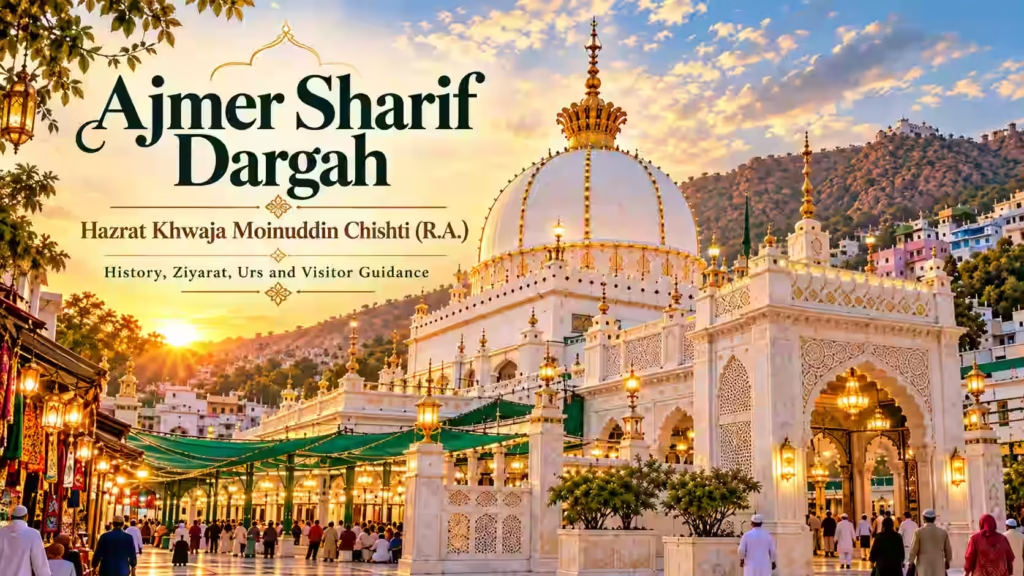
The white marble dome stands above the resting place of the revered saint. Surrounding courtyards, gateways and prayer areas reflect centuries of architectural development, including contributions made during the Mughal period.
Yet the significance of this sacred place goes beyond its buildings.
Families arrive with personal prayers, gratitude and memories of loved ones. Others come to understand the history of Sufism or experience the peaceful atmosphere associated with the teachings of Khwaja Gharib Nawaz.
For many, even a short visit becomes an opportunity for reflection and remembrance.
Understanding Ziyarat Dua and Traditional Offerings
During ziyarat, people visit the resting place with respect and make dua to Allah. Some also describe their visit as darshan.
Flowers and chadar may be presented as voluntary offerings. A mannat is a personal vow or intention, but no particular outcome should ever be promised in return for an offering.
People asking about dargah chadar cost should understand that prices depend on the cloth, size and arrangements requested.
There is no single price for every chadar. Ask what is included before paying. Bringing an offering is not compulsory for entry.
Badi Deg and Choti Deg Food Distribution
The tradition of preparing food in large cooking vessels is closely associated with this historic Sufi centre.
The terms badi deg and choti deg refer to larger and smaller vessels used in traditional food preparation and niyaz arrangements.
Families sometimes arrange meals as an expression of generosity and service to others.
Costs depend on ingredients, preparation and distribution arrangements. Anyone considering a deg booking should confirm the date, full amount and availability before making payment.
When Is the Annual Urs Celebrated?
Urs Sharif commemorates the passing of the saint and is observed during the Islamic month of Rajab.
Special prayers, gatherings and traditional ceremonies bring large numbers of people to Rajasthan.
The main Urs observances for 2026 are scheduled from 11 to 19 December, with Chhatti Sharif on 16 December.
Because the Islamic calendar follows lunar months, confirm the final programme and local arrangements before travelling.
Gate Opening and Closing Timings
Published visiting hours generally follow a seasonal schedule:
- Summer: 4:00 AM to 10:00 PM
- Winter: 5:00 AM to 9:00 PM
These are general timings and do not guarantee access to every inner area throughout the day.
Special ceremonies, religious observances and crowd management may affect access. It is sensible to check the latest gate opening and closing arrangements before beginning a journey.
Ajmer Dargah Khadims and Traditional Guidance
The khadims belong to families historically associated with serving the sacred complex and assisting people with customary religious arrangements.
Their responsibilities can include welcoming families, guiding ziyarat and helping organise traditional services.
Gaddi Nasheen Syed Fakhar Nawaz Chishti is among those offering guidance connected with chadar, nazrana, dua requests and food distribution.
Anyone seeking assistance should confirm the proposed arrangements, availability and charges before proceeding.
Location and Contact Information
The sacred complex is located in the old-city area near Dargah Bazaar in Ajmer, Rajasthan, India.
For those wishing to contact Gaddi Nasheen Syed Fakhar Nawaz Chishti, the service contact address is:
Zia House, Opp. Gate No. 4, Khadim Mohalla, Dargah Sharif, Diggi Bazaar, Ajmer, Rajasthan 305001, India.
This is a contact address near the sacred complex, rather than the main public entrance.
Khwaja Garib Nawaz Dargah contact number: +91 85296 71277
Enquiries concerning ziyarat, chadar arrangements, offerings and Ajmer dargah online donation services can be made through this contact.
Website: https://www.ajmersharifwebsite.com/
Any donation, gifted money or nazrana should be voluntary. Always confirm the recipient, purpose and arrangements before sending payment.
The Lasting Message of Hazrat Khwaja Garib Nawaz (R.A.)
The importance of his spiritual legacy is found in the simple values of compassion, patience and care for humanity.
These teachings encourage people to help those facing difficulties, respect others and live with greater humility.
Whether someone comes for a personal prayer, a family visit or to learn about Sufi history, understanding these principles gives deeper meaning to the journey.
The message of kindness remains relevant far beyond the walls of the historic resting place.