Where to Find Ajmer Sharif Dargah in Rajasthan
Ajmer Sharif Dargah is located in Ajmer city, Rajasthan, India, within the historic neighbourhood around Dargah Bazaar. It is the resting place of Hazrat Khwaja Moinuddin Chishti (R.A.), lovingly remembered as Hazrat Khwaja Garib Nawaz (R.A.). Knowing its position in the city, the nearest transport points and the final walking route can make your first ziyarat much easier.
Ajmer lies among Rajasthan’s Aravalli hills, about 130 kilometres southwest of Jaipur. The sacred complex stands near the foot of Taragarh Hill, surrounded by Dargah Bazaar and old-city lanes.
For maps, use Dargah Bazaar, Ajmer, Rajasthan 305001, India as a general area reference. Ask about a suitable drop-off point because vehicles may not reach the narrow lanes beside the shrine.
Nearby Pushkar is a separate town, not the location of the shrine. If your itinerary includes both destinations, confirm which one your bus or taxi serves. A booking marked simply “Ajmer Pushkar” can be confusing when you are trying to arrange a specific drop-off.
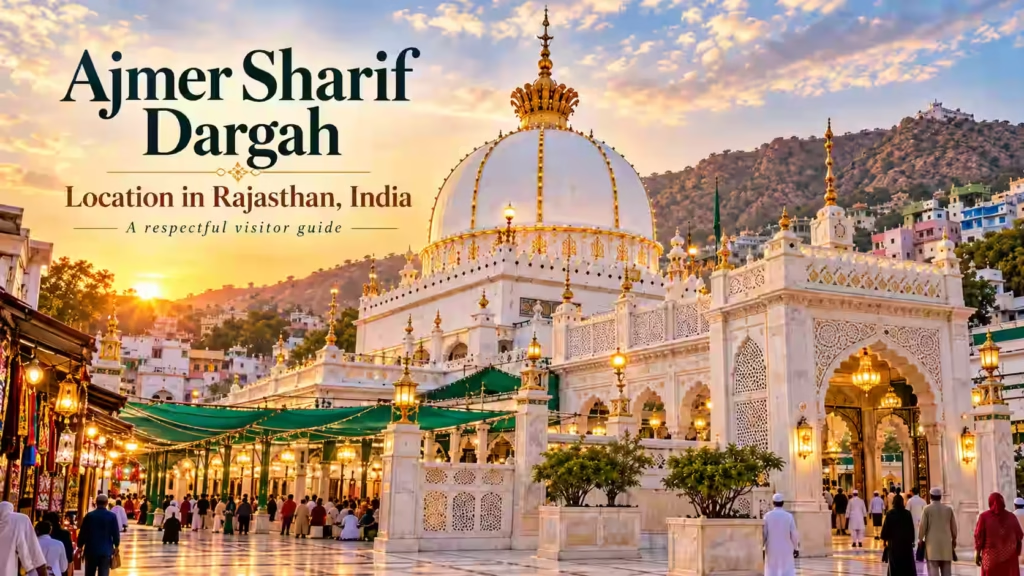
Understanding the Last Part of the Journey
Finding the right entrance takes more care than finding Ajmer itself.
Dargah Bazaar is a familiar approach, with shops, pedestrians and people carrying flowers or chadar. The Nizam Gate is a recognised landmark, although visitors may hear other gate names when asking for directions.
Ask your driver about a safe drop-off point and follow local pedestrian directions. During major gatherings, walking routes may change. Save your hotel address and agree on a meeting place with companions before entering. Mobile directions are helpful, but a local landmark is often easier to explain in a crowded market.
Travelling with older relatives or someone with limited mobility? Allow extra time and enquire about assistance before arriving.
Getting Here from Ajmer Junction Railway Station
Ajmer Junction is the nearest major railway station, roughly two kilometres from the shrine area, depending on the gate and route.
Take a local auto-rickshaw towards Dargah Bazaar or Nizam Gate. Confirm the fare and drop-off point before starting.
Walking is possible for some travellers, but heat, luggage and traffic can make a short ride followed by a market walk more convenient. If you arrive with large bags, consider leaving them securely at your accommodation before visiting. This also makes it easier to move through the narrower parts of the approach.
Travelling to Ajmer by Road
Ajmer has road, bus and rail connections with Jaipur, Delhi and other cities. The journey from Jaipur is roughly 130 kilometres by road, depending on the route.
If driving, arrange parking outside the crowded old-city lanes. During Urs Sharif, plan for traffic controls and heavier crowds.
For a long journey, consider resting in Ajmer before beginning ziyarat. Book accommodation based on how far it is from your intended entrance, rather than judging distance from a city-centre label alone. A hotel close on a map may still require a winding walk.
The Nearest Airports
The Rajasthan Tourism travel guide identifies Kishangarh Airport, around 30 kilometres from Ajmer, as the nearest airport. Check current flight routes and arrange onward transport.
Jaipur International Airport is an alternative, with onward travel to Ajmer by road or train. Either way, plan the final trip into the old city.
International visitors should compare total journey times, not only ticket prices. Direct transport from the airport to the old city may not be available at every hour. Confirm transfer arrangements and whether your vehicle can reach the hotel entrance.
Choosing a Comfortable Time to Visit
October to March is usually more comfortable for walking. Summer afternoons can be very hot, so carry drinking water and choose practical footwear.
India’s official tourism portal lists seasonal visiting hours of approximately 5 am to 9 pm in winter and 4 am to 10 pm in summer. Access to particular areas may change during religious activities or special occasions.
Fridays, holidays and Urs Sharif are often busier. Allow a flexible window if you hope to make dua without rushing. There can also be differences between the hours for the wider site and access to the inner resting place. Check locally before a late-night or early-morning visit.
A Respectful First Ziyarat
Visitors from different backgrounds are welcome. Wear modest clothing, cover your head and follow local instructions about shoes and access to inner areas.
Flowers and chadar are customary offerings, but visitors may also come simply for ziyarat and dua. Purchases are not compulsory. For a voluntary nazrana, confirm the purpose and any cost before agreeing.
Keep valuables secure, leave doorways clear and ask before taking photographs inside sacred areas. If anyone offers to organise a special service or guided ziyarat, make sure you understand what is being offered. You should feel comfortable asking questions and declining anything you do not want.
Allow time to move calmly and respectfully.
Why This Place Matters Beyond Its Address
Hazrat Khwaja Garib Nawaz (R.A.) passed away in Ajmer in 1236. His teachings are remembered for compassion, humility and service to others.
Marble work, gateways and mosques reflect centuries of history, including the Mughal period. Yet many people come primarily for dua and remembrance.
People of many faiths and backgrounds visit this place with respect.
Useful Landmarks Around the Old City
Adhai Din Ka Jhonpra, a historic monument in old Ajmer, is a separate site. Check its route and visiting arrangements independently.
Ana Sagar Lake, elsewhere in the city, is another possible stop after ziyarat. It is not next to the shrine, so plan local transport.
These places help orient your visit, but sightseeing need not be part of a short ziyarat. In hot weather, it may be better to schedule any additional travel after a rest.
Questions Visitors Commonly Ask
Is the shrine located in Jaipur?
No. It is in Ajmer city. Jaipur is the state capital and a common starting point for the onward journey.
Can a taxi take me directly to the tomb?
Do not count on it. Vehicles usually approach the surrounding market area, and the last section may need to be covered on foot. Follow current local directions for the correct gate.
Do I need a chadar to enter?
No. A chadar is a customary offering, not a compulsory purchase for every visitor. You can come for darshan, ziyarat and dua with respect.
How much time should I allow?
Queues and walking routes vary. Leave extra time rather than relying on a strict estimate. This is especially important if you must catch a train or bus later that day.
Plan the Route Before You Leave
Reach Ajmer, choose a suitable drop-off near Dargah Bazaar and allow time to walk towards the shrine. Recheck visiting hours shortly before travelling.
A little preparation leaves more time for what matters: a calm, respectful visit.